How ExoSmart™ Works for Hair Loss

How ExoSmart™ Works for Hair Loss

How ExoSmart™ Works for Hair Loss

Hair loss affects millions of men and women worldwide and is often far more psychologically significant than many people realise. While conventional treatments such as topical medications, oral therapies, and hair transplantation continue to play an important role, regenerative medicine is introducing new approaches aimed at supporting the biological environment of the hair follicle itself.

One of the most rapidly evolving areas within regenerative hair medicine is the use of autologous exosome-based therapies.

At Javaani Medical & Aesthetic Clinic in High Wycombe, Dr Ahmad and the clinical team are introducing ExoSmart™ autologous regenerative technology as part of a medically led approach to hair restoration and scalp rejuvenation.

Unlike many commercially marketed donor-derived exosome products, ExoSmart™ uses the patient’s own biology, focusing on regenerative signalling pathways that may support follicular activity and scalp tissue health.

Understanding Hair Loss

Hair loss is not a single condition.

There are many different causes, including:

  • Androgenetic alopecia (male and female pattern hair loss)
  • Hormonal changes
  • Stress-related shedding
  • Nutritional deficiency
  • Inflammatory scalp conditions
  • Age-related follicular miniaturisation

In androgenetic alopecia, hair follicles gradually shrink over time in response to genetic and hormonal influences. This process is called miniaturisation.

As follicles miniaturise:

  • Hair becomes finer
  • Growth cycles shorten
  • Hair density reduces
  • Follicles may eventually become inactive

Modern regenerative medicine aims to support the biological environment surrounding these follicles before irreversible loss occurs.

Why Regenerative Medicine Is Changing Hair Restoration

Traditional hair restoration therapies largely focus on blocking hormonal pathways or surgically redistributing follicles.

Regenerative medicine approaches hair loss differently.

Instead of simply replacing hair, regenerative therapies aim to influence the scalp microenvironment through biological signalling.

This may involve supporting:

  • Tissue repair pathways
  • Cellular communication
  • Microcirculation
  • Growth signalling
  • Inflammatory regulation

This concept forms the scientific foundation behind platelet-rich plasma (PRP), extracellular vesicle research, and autologous secretome therapies such as ExoSmart™.

What Is ExoSmart™?

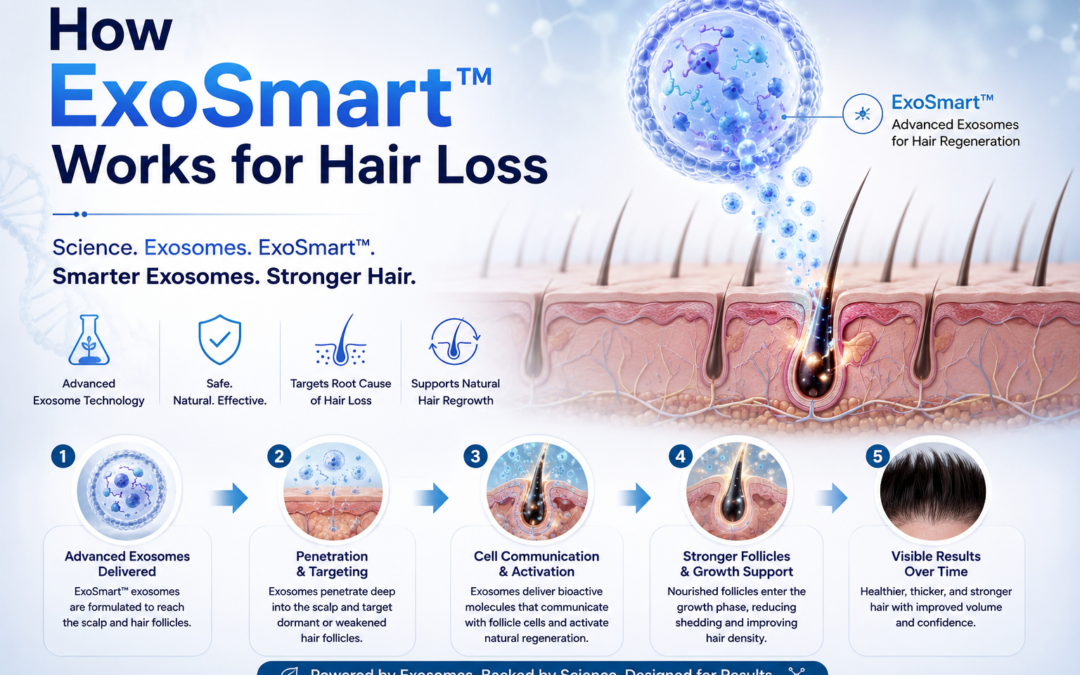
ExoSmart™ is a point-of-care regenerative processing system that uses the patient’s own blood to produce a concentrated autologous biological preparation.

The preparation contains components associated with the body’s regenerative signalling systems, including:

  • Exosomes
  • Cytokines
  • Growth factors
  • Protein signalling molecules
  • Fibrin-based regenerative components

The treatment is designed to concentrate elements of the body’s natural secretome, which refers to the collection of biologically active molecules released by cells.

According to the ExoSmart™ physician guide, regenerative signalling may depend on the interaction between multiple biological components rather than isolated exosomes alone.

This “whole secretome” concept is increasingly important within regenerative medicine research.

How Autologous Exosomes May Support Hair Growth

Hair follicles are biologically active mini-organs that depend on constant cellular communication.

Exosomes act as signalling vesicles that help cells exchange information. Researchers believe these signalling pathways may influence processes involved in:

  • Hair follicle cycling
  • Dermal papilla signalling
  • Cellular communication
  • Tissue repair
  • Scalp vascular support
  • Inflammatory modulation

The goal of regenerative therapy is not to create entirely new follicles. Instead, it aims to support existing follicles and improve the biological environment in which they function.

This distinction is important because ethical regenerative medicine should avoid exaggerated claims such as “instant hair regrowth” or “guaranteed follicle regeneration.”

At Javaani Clinic, patient education forms a central part of treatment planning.

The Importance of the Hair Follicle Microenvironment

Modern hair research increasingly focuses on the concept of the follicular microenvironment.

This refers to the biological ecosystem surrounding each follicle, including:

  • Blood supply
  • Signalling molecules
  • Immune activity
  • Extracellular matrix support
  • Inflammatory balance

When this environment deteriorates, follicular performance may decline.

Regenerative therapies such as ExoSmart™ aim to support this biological environment through autologous signalling pathways derived from the patient themselves.

This is one reason regenerative medicine is increasingly viewed as complementary to traditional hair restoration rather than simply an alternative to it.

ExoSmart™ vs Traditional PRP

Platelet-rich plasma (PRP) remains one of the most established regenerative treatments in hair restoration medicine.

The ExoSmart™ physician guide references substantial published PRP evidence, including meta-analyses covering approximately 43 randomised controlled trials involving nearly 2,000 patients.

PRP primarily focuses on platelet-derived growth factors.

ExoSmart™ attempts to broaden this regenerative signalling environment by concentrating additional secretome components including extracellular vesicles and cytokine pathways.

This does not necessarily mean ExoSmart™ “replaces” PRP. Instead, it represents a further evolution of autologous regenerative processing technologies.

Who May Be Suitable for ExoSmart™ Hair Restoration?

Potential candidates may include:

  • Men with early hair thinning
  • Women experiencing diffuse hair density reduction
  • Patients with androgenetic alopecia
  • Individuals seeking medically led regenerative options
  • Patients interested in autologous therapies

The best outcomes are generally expected when follicles remain biologically active.

Patients with advanced follicular loss or complete scalp fibrosis may require alternative approaches such as hair transplantation.

At Javaani Clinic, treatment suitability is assessed during consultation with Dr Ahmad before recommendations are made.

What Happens During Treatment?

Treatment typically involves:

  1. Blood collection
  2. Regenerative processing using the ExoSmart™ system
  3. Preparation of the autologous secretome concentrate
  4. Administration into targeted scalp areas

The procedure is minimally invasive and performed within the clinic setting.

Because the preparation is autologous, no donor tissue or foreign biological material is introduced.

Safety and Clinical Considerations

Patient safety remains one of the most important considerations in regenerative medicine.

Because ExoSmart™ uses the patient’s own biological material, theoretical risks associated with donor-derived products may be reduced.

However, it is equally important to maintain realistic expectations.

Regenerative medicine remains an evolving field, and responsible clinics should avoid unsupported claims such as:

  • Permanent hair regrowth guarantees
  • “Stem cell cures”
  • Unrealistic density restoration promises

The attached physician material also highlights that higher exosome concentration figures do not automatically prove superior clinical outcomes.

At Javaani Clinic, the emphasis is on medically supervised, evidence-informed regenerative care rather than marketing hype.

The Future of Regenerative Hair Medicine

Hair restoration medicine is evolving rapidly.

As scientific understanding of extracellular vesicles, secretomes, and regenerative signalling improves, autologous biologically based therapies may become increasingly integrated into modern hair management strategies.

ExoSmart™ represents part of this broader movement toward regenerative medicine approaches designed to support tissue biology rather than simply masking symptoms.

At Javaani Medical & Aesthetic Clinic, Dr Ahmad’s philosophy focuses on combining:

  • Medical governance
  • Scientific credibility
  • Patient education
  • Ethical regenerative practice
  • Individualised treatment planning

This balanced approach is essential as regenerative medicine continues to develop.

Related Treatments at Javaani Clinic

You may also be interested in:

  • PRP Hair Restoration
  • Hair Loss Blood Testing
  • Microneedling for Hair Regeneration
  • Regenerative Skin Rejuvenation
  • Full Hair Restoration Consultation

Autologous vs Allogenic vs Plant vs Animal Exosomes

Autologous vs Allogenic vs Plant vs Animal Exosomes

What Patients Need to Know Before Choosing Exosome Therapy

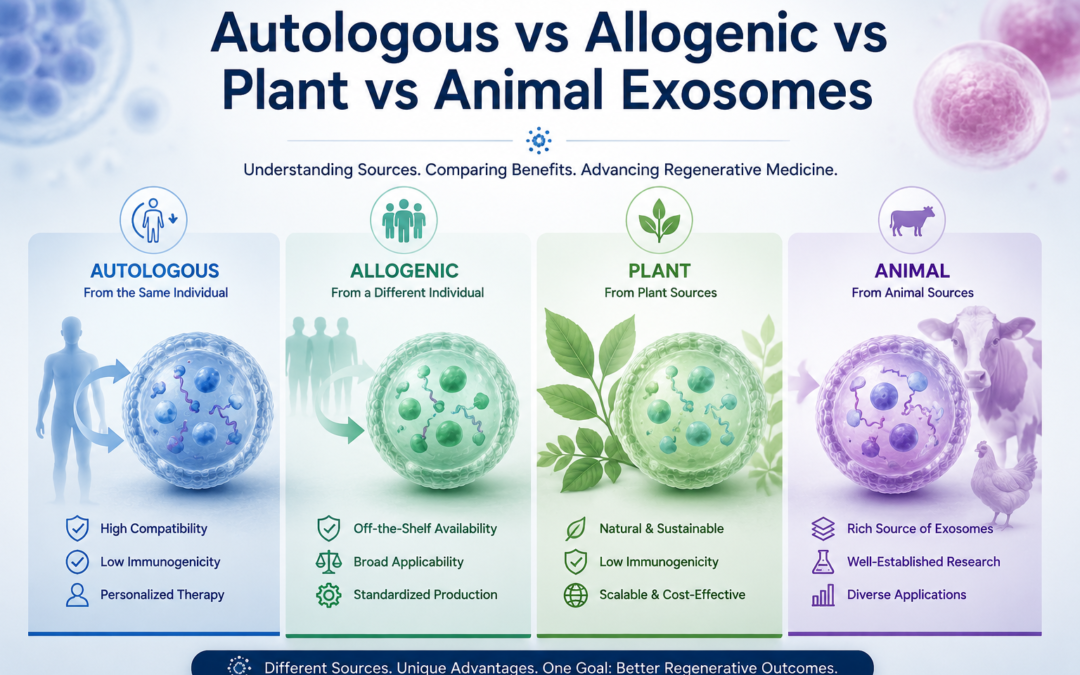
The term “exosome therapy” is now widely used in aesthetic medicine, regenerative medicine, and hair restoration clinics. However, many patients are unaware that exosome treatments can originate from very different biological sources.

This distinction is clinically important.

Not all exosomes are produced in the same way, regulated in the same way, or biologically compatible in the same way. Some treatments are derived from the patient’s own body, while others may originate from donor tissue, plants, or even animal sources.

At Javaani Medical & Aesthetic Clinic in High Wycombe, Dr Ahmad and the clinical team believe that patients should understand exactly what type of regenerative product is being used before undergoing treatment.

This article explains the scientific and clinical differences between:

  • Autologous exosomes
  • Allogenic (donor-derived) exosomes
  • Plant-derived exosomes
  • Animal-derived exosomes

The goal is not marketing hype, but informed medical education.

Why the Source of Exosomes Matters

In regenerative medicine, biological origin matters significantly because it influences:

  • Biological compatibility
  • Regulatory classification
  • Immune response potential
  • Safety considerations
  • Clinical philosophy
  • Ethical considerations

Many online advertisements simply use the term “exosomes” without clearly explaining their source. However, from a medical perspective, understanding where these biological materials come from is essential.

At Javaani Clinic, this distinction forms an important part of the patient consultation process.

What Are Exosomes?

Exosomes are microscopic extracellular vesicles naturally released by cells. They function as biological communication particles, carrying signalling molecules between cells and tissues.

These vesicles may contain:

  • Cytokines
  • Growth factors
  • Proteins
  • Lipids
  • RNA signalling molecules

Researchers are investigating the role of exosomes in:

  • Tissue regeneration
  • Hair follicle signalling
  • Inflammatory modulation
  • Skin repair pathways
  • Cellular communication networks

Importantly, exosomes are not “living stem cells.” Instead, they are communication vesicles released by cells.

This distinction is often misunderstood in aesthetic marketing.

The Four Main Categories of Exosome Therapy

Although exosome treatments are often grouped together commercially, they actually fall into four broad categories based on biological origin:

Type Source
Autologous Derived from the patient
Allogenic Derived from donor tissue
Plant-derived Derived from plant cells
Animal-derived Derived from animal tissue

Each approach carries different scientific, ethical, and regulatory implications.

Autologous Exosomes

Autologous exosomes are derived from the patient’s own biological material.

At Javaani Clinic, this is the regenerative philosophy behind ExoSmart™ autologous exosome technology.

The treatment process involves:

  • Taking a blood sample from the patient
  • Processing the sample using a specialised system
  • Concentrating regenerative signalling components
  • Re-administering the preparation into target tissue

Because the material originates from the patient themselves, autologous regenerative therapy may offer advantages including:

  • Biological compatibility
  • Avoidance of donor tissue exposure
  • Lower theoretical immune risk
  • Improved regulatory clarity

The ExoSmart™ physician guide also emphasises the importance of the “whole secretome” concept, suggesting that regenerative signalling may depend on the combined interaction of exosomes, proteins, cytokines, and growth factors rather than isolated particles alone.

This broader biological framework is one reason why many clinicians continue to favour autologous regenerative approaches.

Allogenic Exosomes

Allogenic exosomes originate from donor tissue rather than the patient receiving treatment.

Commercially marketed allogenic products may use material derived from:

  • Umbilical cord tissue
  • Placental tissue
  • Amniotic tissue
  • Laboratory-expanded donor cells

These products are widely marketed internationally, particularly within aesthetic medicine and hair restoration clinics. However, they also raise important regulatory and biological questions.

The physician guide attached earlier references FDA warning actions involving companies marketing donor-derived exosome products as unapproved biologics.

This does not necessarily mean all allogenic exosome products are unsafe. However, it highlights the importance of:

  • Regulatory oversight
  • Manufacturing transparency
  • Source traceability
  • Proper clinical governance

Patients should always ask where donor-derived biological material originates from and whether the product has regulatory approval within the relevant jurisdiction.

Plant-Derived Exosomes

Plant-derived exosomes have become increasingly popular in cosmetic and skincare marketing.

These products may use vesicles extracted from plants such as:

  • Green tea
  • Ginseng
  • Rose
  • Grapes
  • Aloe vera

Plant exosomes are often positioned as “natural” or “vegan-friendly” alternatives. However, from a regenerative medicine perspective, they remain biologically very different from human-derived signalling systems.

Current limitations include:

  • Limited high-quality clinical evidence
  • Different intercellular signalling biology
  • Uncertain long-term therapeutic relevance in human tissue regeneration

At present, most plant-derived exosome products remain positioned closer to cosmetic biotechnology than medically led regenerative therapy.

Animal-Derived Exosomes

Animal-derived exosomes are less commonly discussed publicly but may be used within certain biological or laboratory-derived products.

Potential sources may include:

  • Bovine tissue
  • Porcine tissue
  • Animal cell cultures

These products raise additional considerations involving:

  • Biological compatibility
  • Ethical concerns
  • Regulatory variation
  • Potential immunogenicity

In mainstream aesthetic practice within the UK, animal-derived exosome use remains relatively limited compared with autologous or donor-derived approaches.

Why Javaani Clinic Uses an Autologous Approach

At Javaani Medical & Aesthetic Clinic, Dr Ahmad’s regenerative philosophy prioritises:

  • Medical governance
  • Biological compatibility
  • Ethical transparency
  • Evidence-informed care
  • Patient safety

For this reason, Javaani Clinic has chosen to introduce an autologous regenerative approach using ExoSmart™ technology rather than relying on donor-derived exosome products.

This approach aligns more closely with established medical principles already familiar within regenerative medicine, including platelet-rich plasma (PRP) and autologous biological therapies.

The aim is not to overstate claims or present exosomes as a miracle treatment. Instead, the focus is on using biologically compatible regenerative signalling systems within an ethical and medically supervised framework.

Regulatory and Safety Considerations

The exosome field remains scientifically exciting but commercially controversial.

Patients should be cautious of clinics making exaggerated claims such as:

  • Guaranteed hair regrowth
  • Permanent reversal of ageing
  • “Stem cell equivalent” marketing
  • Unregulated imported biologics
  • Claims unsupported by clinical evidence

The physician guide used in this article correctly highlights that concentration claims alone do not prove clinical superiority and that regenerative biology likely follows complex dose-response relationships.

Responsible regenerative medicine requires balanced patient education rather than hype-based advertising.

Choosing the Right Regenerative Treatment

Exosome therapy is not one single treatment category.

The biological source matters.

Patients considering regenerative hair or skin treatments should ask:

  • What is the source of the exosomes?
  • Is the product autologous or donor-derived?
  • Is the treatment medically supervised?
  • What evidence supports the approach?
  • Is the clinic transparent about limitations and risks?

At Javaani Clinic, consultations are designed to help patients understand both the potential benefits and limitations of regenerative medicine before proceeding with treatment.

Related Treatments at Javaani Clinic

You may also be interested in:

  • ExoSmart™ Hair Restoration
  • PRP for Hair Loss
  • Skin Rejuvenation Treatments
  • Microneedling & Regenerative Therapy
  • Full Regenerative Consultation


Full Body Health Screening Blood Tests in Buckinghamshire

Full Body Health Screening Blood Tests in Buckinghamshire

Full Body Health Screening Blood Tests in Buckinghamshire

(24–72 Hours, GP-Led by Dr Ahmad)

GP-Led Full Body Blood Testing in High Wycombe

Are you looking for Full Body Health Screening Blood Tests?

Many patients today are not just looking to investigate one symptom — they want a complete understanding of their health, including:

At Javaani Clinic in High Wycombe, Dr Ahmad provides structured GP-led full body blood testing, designed to give a complete overview of your health using clinically relevant panels.

All samples are processed by The Doctors Laboratory, with results typically available within 24–72 hours.

We welcome patients from:

  • High Wycombe
  • Hazlemere
  • Beaconsfield
  • Amersham
  • Marlow
  • Gerrards Cross
  • Great Missenden
  • surrounding Buckinghamshire areas

If you are searching for a private full body blood test in Buckinghamshire, this service provides medically structured, GP-led diagnostics — not generic testing kits.

What Is a Full Body Health Screening Blood Tests?

A full body blood test is a comprehensive panel of investigations designed to assess multiple systems simultaneously.

Rather than focusing on one issue, it evaluates:

  • metabolic health
  • hormonal balance
  • nutritional status
  • organ function
  • cardiovascular risk

This approach is increasingly used in preventive medicine, allowing early identification of potential issues before symptoms develop.

What Does Full Body Testing Include?

At Javaani Clinic, Dr Ahmad structures testing based on clinical relevance.

Core Health Markers

  • Full blood count
  • kidney function
  • liver function

These provide baseline insight into overall health.

Metabolic & Cardiovascular Markers

  • cholesterol (LDL, HDL, triglycerides)

HbA1c (diabetes screening)

You may also wish to read:

→Cholesterol, Heart & Metabolic Blood Testing in High Wycombe

Vitamin & Nutritional Markers

  • vitamin D
  • vitamin B12
  • folate
  • iron & ferritin

Related article:

Vitamin D, Iron & Fatigue Blood Testing in High Wycombe

Hormonal Health

Depending on symptoms:

Explore further:

Private Testosterone & Male Hormone Testing in Buckinghamshire
Private Thyroid Blood Test in High Wycombe

Why Full Body Health Screening Blood Tests Are Increasing in Demand

Modern patients are increasingly proactive about health.

Common reasons include:

  • persistent fatigue
  • preventative screening
  • family history of illness
  • performance optimisation
  • peace of mind

Many individuals searching:

  • “full body blood test UK”
  • “health check blood test near me”
  • “private GP blood tests Buckinghamshire”

are seeking clarity, not just diagnosis.

Preventive Medicine: A GP-Led Approach

Full body testing is most effective when clinically guided.

At Javaani Clinic:

  • tests are selected based on relevance
  • results are interpreted in context
  • unnecessary testing is avoided
  • meaningful follow-up is possible

This is where GP oversight from Dr Ahmad adds significant value.

Laboratory Accuracy & Reliability

All samples are processed by The Doctors Laboratory.

This ensures:

  • UKAS-accredited standards
  • high diagnostic accuracy
  • reliable reference ranges
  • consistent reporting

Clinic-based venous sampling ensures greater reliability than home testing kits

Results Within 24–72 Hours

Most full body test results are available within:

24–72 hours

This allows:

  • rapid insight into health
  • early intervention if required
  • reduced uncertainty

Who Should Consider Full Body Blood Testing?

You may benefit if you:

  • want a complete health overview
  • feel persistently tired or “not quite right”
  • have family history of disease
  • want preventive screening
  • are over 30 and health-conscious
  • want baseline markers for future comparison

Full Body Testing vs Individual Panels

Individual tests (thyroid, testosterone, vitamins) are useful when symptoms are specific.

Full body testing is ideal when:

  • symptoms are unclear
  • multiple factors may be involved
  • you want a broad health baseline

This makes it one of the most comprehensive private blood testing options available.

GP Oversight by Dr Ahmad

All testing at Javaani Clinic is overseen by Dr Ahmad, ensuring:

  • clinically appropriate test selection
  • structured interpretation
  • optional written report
  • guidance on next steps
  • ability to share results with your NHS GP

This ensures continuity between private diagnostics and NHS care.

Important: This service does not replace emergency medical care.

Full Body Blood Testing in Buckinghamshire

If you are searching for:

Javaani Clinic provides structured, medically supervised full body blood testing, with results typically available within 24–72 hours.

Medically reviewed by Dr Ahmad
GP | Javaani Clinic
High Wycombe, Buckinghamshire


Laser Hair Removal in High Wycombe

Laser Hair Removal in High Wycombe

Laser Hair Removal in High Wycombe

Introduction

Are you tired of the constant battle with unwanted hair? Say goodbye to razors, waxing strips, and messy hair removal creams, and embrace the wonders of Laser Hair Removal in High Wycombe. In this comprehensive guide, we'll explore the benefits of this revolutionary hair removal technique and how it can help you achieve smooth and hair-free skin. Whether you're a first-timer or looking for a reliable clinic in High Wycombe, we've got you covered!

The Advantages of Laser Hair Removal

Laser Hair Removal is a cutting-edge cosmetic procedure that uses concentrated beams of light to target hair follicles, preventing further hair growth. Unlike traditional hair removal methods, laser treatments offer numerous benefits, such as:

a. Long-lasting Results: With each session, you'll notice a significant reduction in hair growth. Multiple treatments lead to semi-permanent or even permanent results, saving you time and effort in the long run.

b. Precision and Safety: The laser's ability to target hair follicles precisely ensures that surrounding skin remains unaffected. This makes it a safe and effective option for various body areas, including the face, arms, legs, and bikini line.

c. Minimal Discomfort: Laser Hair Removal is virtually painless, with most patients describing it as a slight tingling sensation. Modern technologies have significantly improved the comfort level of the procedure.

Understanding the Laser Hair Removal Process

Before undergoing Laser Hair Removal, it's essential to comprehend how the procedure works. The process involves several stages:

a. Consultation: A reputable clinic in High Wycombe will begin with a consultation, during which a trained professional will assess your skin type, hair color, and medical history. This evaluation helps determine the appropriate laser settings for optimal results.

b. Preparation: Prior to the treatment, you may be advised to avoid sun exposure and hair removal methods that target the hair root, such as plucking or waxing.

c. Treatment: During the session, the laser will be directed at the target area, emitting pulses of light that penetrate the hair follicles. The heat from the laser disables the follicles, hindering future hair growth.

d. Post-Treatment Care: Following the procedure, you might experience mild redness or sensitivity in the treated area. Practicing proper aftercare, such as using sunscreen and moisturizing, helps to promote a speedy recovery.

Choosing the Right Clinic in High Wycombe

To ensure a safe and successful Laser Hair Removal experience, selecting a reputable clinic in High Wycombe is crucial. Here are some tips for finding the best one:

a. Experience and Expertise: Look for clinics with certified and experienced technicians who have a proven track record of performing Laser Hair Removal treatments.

b. Advanced Technology: Ensure that the clinic uses state-of-the-art laser equipment that caters to various skin types and hair colors.

c. Client Reviews: Check online reviews and testimonials from previous clients to gauge the clinic's reputation and customer satisfaction.

d. Customized Treatment Plans: A reliable clinic will offer personalized treatment plans tailored to your specific needs and concerns.

Conclusion

If you're searching for Laser Hair Removal in High Wycombe, you're on the path to smoother, hair-free skin! This innovative procedure provides long-lasting results, precision, and minimal discomfort. By understanding the process and choosing a reputable clinic, you'll be one step closer to achieving the confidence-boosting results you desire. Say goodbye to unwanted hair and hello to a more carefree and confident you with Laser Hair Removal in High Wycombe!

Why is it Best to Choose IPL Laser Hair Removal?

Why is it Best to Choose IPL Laser Hair Removal?

Getting rid of body hair once a month, once a week, or even once a day can be a chore for people who de-fuzz. If you’ve ever had a shaving rash, you know it’s not pretty, and regular waxing can hurt and cost a lot. All this for skin that is more or less smooth for maybe a week?

Laser hair removal is an alternative that works better and lasts longer. It goes without saying that it is always best to have the treatment performed by a qualified practitioner due to the nature of lasers. The in-clinic treatment sends a laser straight to your hair’s root. The color in your hair is what draws the laser light to it. When the light is aimed at the right stage of hair growth, it turns into heat, which kills the active hair follicles and stops hair from growing.
So, if the promise of stubble-free skin for a long time sounds appealing, here’s why it’s best to choose IPL Laser Hair Removal.

Almost any part of your body can be treated.

Laser hair removal is often done on the legs, underarms, and bikini line. But you can treat your lips, chin, neck, arms, stomach, back, and shoulders, among other things.

The laser works on all colors of skin.

You might think that the laser wouldn’t be able to see the pigment in your hair if you have dark hair and dark skin, but this isn’t true. The most important thing is that the right wavelength for your skin type is used.

Costs less in the long run.

Laser hair removal costs about £50 per session, and you’ll need about six. However, in the long run, it can save you time and money on waxing, shaving, and epilating. Fun fact: If you get a bikini wax every month for the average price betwGetting rid of body hair once a month, once a week, or even once a day can be a chore for people who de-fuzz. If you’ve ever had a shaving rash, you know it’s not pretty, and regular waxing can hurt and cost a lot. All this for skin that is more or less smooth for maybe a week?

Laser hair removal is an alternative that works better and lasts longer. It goes without saying that it is always best to have the treatment performed by a qualified practitioner due to the nature of lasers. The in-clinic treatment sends a laser straight to your hair’s root. The color in your hair is what draws the laser light to it. When the light is aimed at the right stage of hair growth, it turns into heat, which kills the active hair follicles and stops hair from growing.
So, if the promise of stubble-free skin for a long time sounds appealing, here’s why it’s best to choose IPL Laser Hair Removal.

Almost any part of your body can be treated.

Laser hair removal is often done on the legs, underarms, and bikini line. But you can treat your lips, chin, neck, arms, stomach, back, and shoulders, among other things.

The laser works on all colors of skin. een the ages of 18 and 50, you’ll spend about £10,000 on your bikini area alone. This number doesn’t include how much you’ll pay over time on razors and other ways to get rid of hair.

If you’re considering getting IPL laser treatment, always go to a fully-qualified practitioner; you should avoid any unbelievable discounts. So far, the procedure does not appear to pose any long-term health risks. Mild redness, bumpy skin, and itching may be temporary side effects. It’s also important to get a patch test and make sure clinics. Educate yourself a little bit, and you are ready to go for the best IPL laser hair removal.